

WHAT DOES ALL OF THIS MEAN FOR YOU?
Autodesk University 2026 brought major announcements across AI, Forma, Revit, Fusion, connected data, digital twins, and more. But what do these changes actually mean for your organization?
Whether you attended AU or followed along from home, Symetri experts are here to help you make sense of what’s next and identify what matters for your workflows, technology, and business.
THE BIG THEME: PROJECT INTELLIGENCE
AI was everywhere at AU (shocking, right?), but the bigger story was the data behind it.
Autodesk’s strategy centers on connecting AI with the project data, geometry, and industry context already created across its ecosystem, with the goal of producing more relevant, actionable intelligence for Design, Make, and Operate workflows.


Our takeaway? The conversation is moving beyond “How can we use AI?” toward “How can we use our data and AI together to make better decisions?”
FIVE THINGS TO KNOW FROM AU 2026

01 | ai is moving deeper into everyday workflows
Autodesk previewed AI capabilities designed to assist with more of the actual work, from design exploration and documentation to project review and issue identification.
For AECO teams, announced capabilities include Revit workflows to automate room elements and documentation, Forma tools to evaluate layouts, and Drawing Compliance Review to check drawing packages against codes.

What could this mean for your team?
Less time spent on repetitive tasks and more opportunity to apply your expertise where it matters most.
02 | Autodesk Assistant is evolving
Autodesk previewed a next-generation, agent-first Assistant planned to begin rolling out in 2027. The roadmap includes Personal Pulse for surfacing prioritized project insights, Assistant Spaces for teams and AI agents to investigate problems together, and Assistant Builder for connecting customers’ own agents and Marketplace tools.
This is a roadmap, not functionality that is all generally available today.
What could this mean for your team?
It may be time to think beyond individual AI tools and start considering how AI could interact with your broader technology ecosystem.

03 | forma is becoming a bigger part of the ecosystem
Forma was a major focus of the AECO announcements. Civil 3D is becoming a Forma Connected Client, Forma Street Design connects conceptual street and intersection design with Civil 3D, and deeper Esri and Fugro integrations are bringing additional geospatial and subsurface context into the platform.
Revit also continues as a Forma Connected Client as Autodesk develops its longer-term Forma strategy.
What could this mean for your team?
More connected workflows between early planning, detailed design, project data, and the tools your teams already use.
04 | the digital thread is extending into operations
The lifecycle conversation isn’t stopping at project delivery.
Autodesk highlighted connections among Tandem, Forma, FlexSim, and MaintainX designed to link digital twins, simulation, project information, and maintenance execution. It also showcased a Tandem and FlexSim workflow for simulating operational changes before implementing them.
What could this mean for your organization?
The data created during design and construction has the potential to become more useful throughout operations and inform future decisions.

05 | ai is advancing in design & manufacting, too
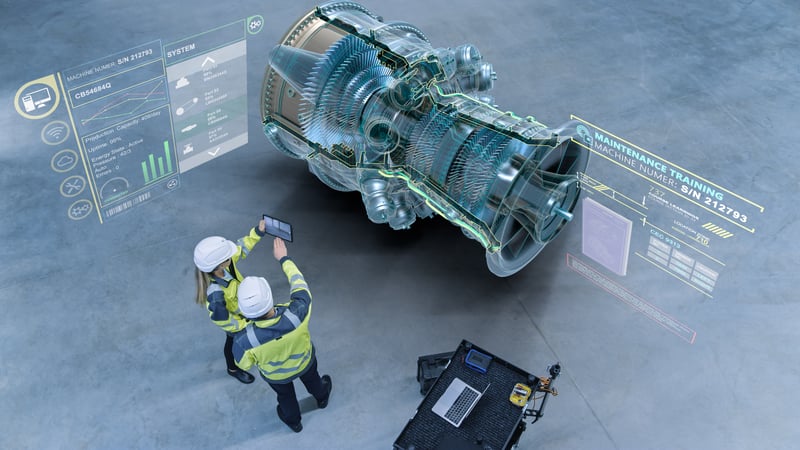
For manufacturing teams, Autodesk highlighted new Fusion capabilities, including AutoConstrain and AutoTimeline, which use AI to turn imported geometry into editable parametric parts; AutoAssemble, which partially automates assembly processes; and System Modeler, which automates elements of machine setup, toolpath generation, and production preparation.
What could this mean for your team?
More opportunities to automate repetitive engineering and production tasks while creating a more connected path from design through manufacturing.
These takeaways are only the beginning
Knowing what Autodesk announced is one thing. Understanding what matters to your organization is another. Maybe you left AU wondering:
-
Where should we actually start with AI?
- What does the Forma roadmap mean for our current Revit workflows?
- How can we get more value from the data we already have?
- Which new capabilities should we be paying attention to?
-
How do we turn these takeaways into an actionable technology strategy?
That’s where Symetri can help.
Our experts can help you cut through the noise, understand the technology, and identify practical next steps based on your people, processes, data, and business goals.
still have questions? let's talk.
Whether you had a conversation with us at AU and want to keep it going, didn’t get the chance to speak with an expert, or couldn’t make it to Vegas, we’d love to connect.
Tell us what you want to explore, and we’ll connect you with the right Symetri expert to dive deeper into the AU 2026 announcements that matter the most to you.